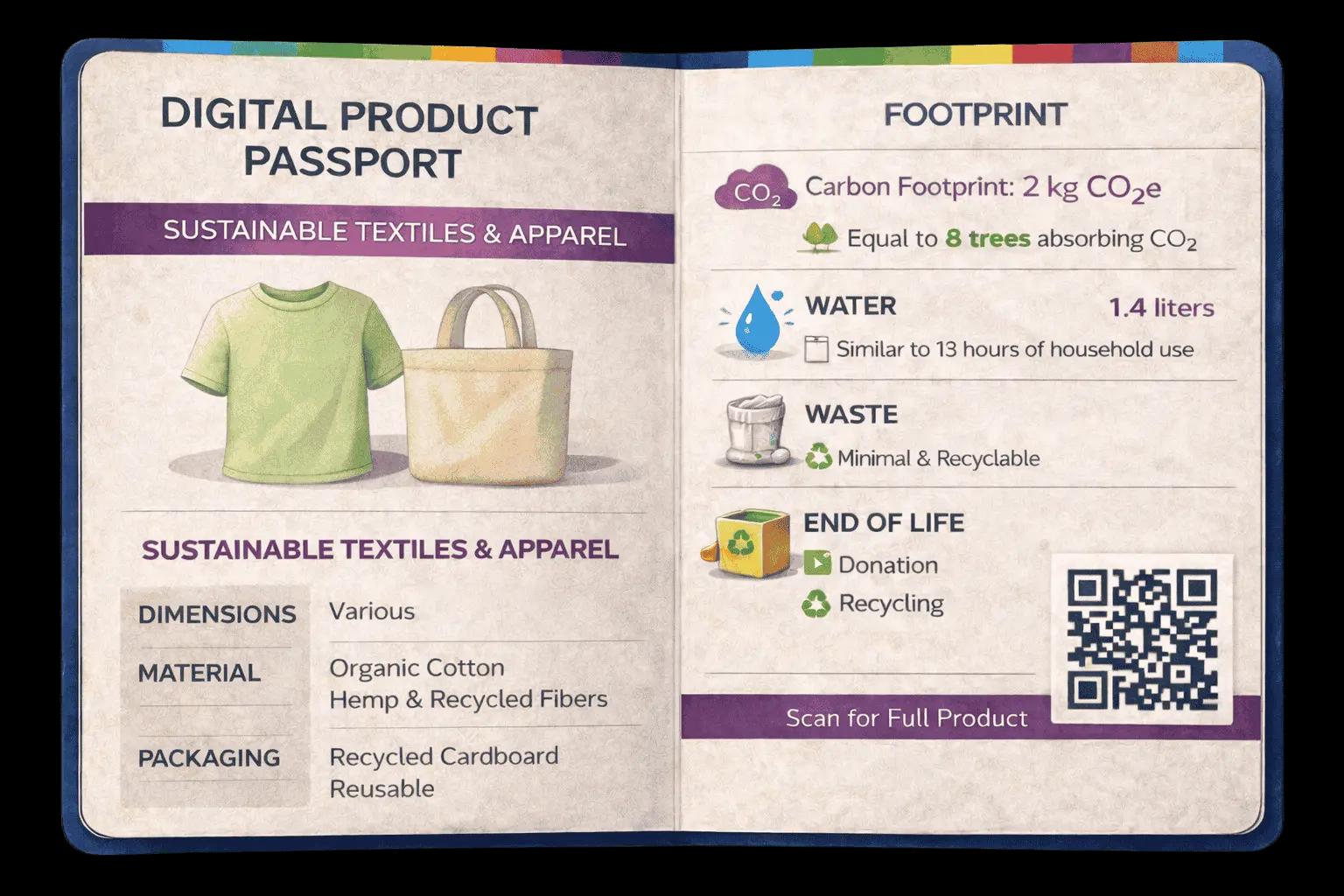
How does Untrash help sustainable textiles and apparel manufacturers improve sustainability outcomes?
Untrash helps sustainable textiles and apparel manufacturers measure emissions across materials like organic cotton, recycled polyester, bamboo, hemp and processes such as spinning, weaving/knitting, dyeing, finishing. By identifying hotspots like dyeing and finishing and energy-intensive processing, manufacturers can prioritise the changes that deliver the highest environmental impact with minimal operational disruption.
How does Untrash support recyclability and circular product design?
Untrash evaluates how material choices, process steps, and product structure influence recyclability and end-of-life outcomes. This allows sustainable textiles and apparel manufacturers to understand trade-offs related to coatings, blends, additives, or multi-material designs and improve circularity in a practical, data-backed way.
How does Untrash help validate sustainability claims and reduce greenwashing risk?
Untrash links sustainability claims directly to quantified LCA outputs aligned with recognised standards. Claims around recyclability, carbon footprint, or sustainable materials are supported by transparent calculations, helping sustainable textiles and apparel manufacturers communicate credibly with buyers, regulators, and consumers.
What data is required to get started on sustainability and LCA?
To begin, sustainable textiles and apparel manufacturers typically need data related to fabric weight, dye processes, energy and water usage and key processes such as spinning, weaving/knitting, dyeing, finishing. Untrash is designed to work with incomplete or evolving datasets, enabling manufacturers to start with available data and improve accuracy over time.
How does this help meet buyer expectations and market access requirements?
Buyers, marketplaces, and sourcing partners increasingly require product-level sustainability data, especially for products sold in india, eu, us. Untrash helps sustainable textiles and apparel manufacturers meet these expectations with structured insights aligned to supply chain transparency, esg disclosures and commonly requested sustainability disclosures.
Why is LCA a foundational requirement for sustainability compliance?
LCA underpins most sustainability regulations, certifications, and reporting frameworks. Whether it is carbon disclosure, eco-labels, or digital product information, LCA provides the auditable data layer required to comply with supply chain transparency, esg disclosures and standards such as GOTS, OEKO-TEX, ISO 14001.