Digital Product Passport (DPP): The New Export Requirement Indian Manufacturers Can’t Afford to Ignore

Europe Is Changing How Products Compete
For a long time, exporting to Europe came down to getting a few things right.
– Make a good product.
– Keep the price competitive.
– Deliver on time.
– Meet the required standards and certifications.
That formula has worked well for Indian manufacturers across textiles, engineering, packaging, chemicals, electronics and consumer products.
But the rules of the game are changing.
Europe is moving towards a system where products will need to carry much more information about themselves: what they are made of, where those materials came from, how much recycled content they contain, their environmental impact, how they can be repaired, and what happens to them at the end of their useful life.
Much of this information will eventually be made available through a Digital Product Passport (DPP).
For an Indian company selling into Europe, this is important for a simple reason: even if the DPP requirement does not sit directly with you, your European customer may still need the data from you.
And that changes the conversation from: “Can you manufacture this product?”
to “Can you give me the data to prove what this product is, where it came from, and how it was made?”
So, what exactly is a Digital Product Passport (DPP)?
A Digital Product Passport is essentially a digital record for a product. Depending on the product category and the rules that apply to it, that record can include information about its materials, raw material origin, recycled content, carbon footprint, durability, repairability, compliance documentation and end-of-life options.
The idea is not particularly complicated. Instead of sustainability and product information sitting in different spreadsheets, certificates, PDFs and supplier emails, the information should become easier to access, share and verify throughout the product’s lifecycle.
The European Union is building this framework through the Ecodesign for Sustainable Products Regulation (ESPR), with requirements being introduced for different product categories over time.
And this is where it gets interesting for Indian businesses.
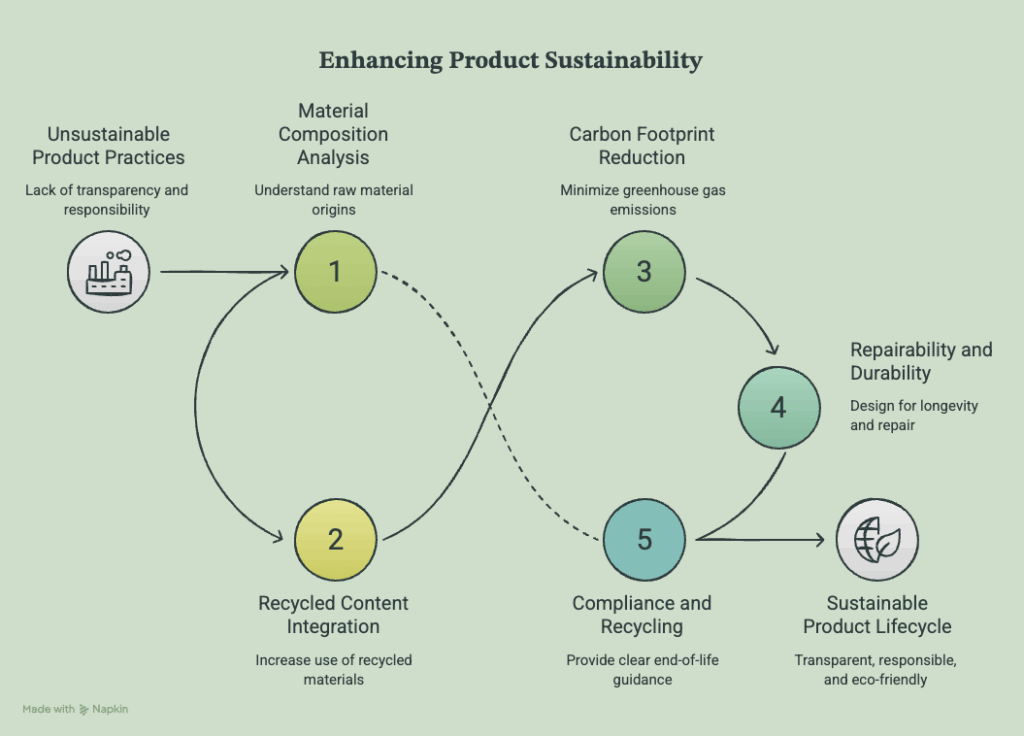
The objective is simple: Make products more transparent, traceable, repairable, and circular.
Under the EU’s Ecodesign for Sustainable Products Regulation (ESPR), Digital Product Passports will gradually become mandatory across multiple industries.
Why Is the EU Introducing Digital Product Passports?
Europe’s sustainability goals face a fundamental challenge. Most environmental information today sits inside:
- Supplier spreadsheets
- Certifications
- Sustainability reports
- Procurement systems
- Internal databases
The information exists but is difficult to verify and difficult to access. Digital Product Passports aim to create a common system where product information can move seamlessly across:
- Manufacturers
- Suppliers
- Brands
- Importers
- Consumers
- Repairers
- Recyclers
- Regulators
The goal is to create products that are not only sustainable but also verifiably sustainable.
Why Digital Product Passports Matter for Indian Companies
Many Indian businesses assume DPP is only relevant for European manufacturers. That assumption is incorrect. If your products enter the European market, your buyers will increasingly need DPP-related information from you.
This means Indian exporters will need to provide:
- Product-level material data
- Traceability information
- Recycled content evidence
- Environmental impact data
- Supplier-origin information
The question is no longer:
“Can you manufacture this product?”
Increasingly, buyers are asking:
“Can you prove what this product is made of and where it came from?”
The Shift from Sustainability Claims to Sustainability Proof
Historically, sustainability was often communicated through:
- Company reports
- Certifications
- Marketing claims
- Corporate commitments
Digital Product Passports change the conversation. Instead of company-level narratives, buyers want product-level evidence.
For example:
Instead of:
“We use sustainable materials.”
The future expectation becomes:
“This product contains 38% recycled content, sourced from verified suppliers and supported by traceable documentation.”
That difference is substantial.
One is a claim.
The other is proof.
How DPP Changes Export Competitiveness
Many companies see DPP as a compliance issue. In reality, it is becoming a commercial issue.
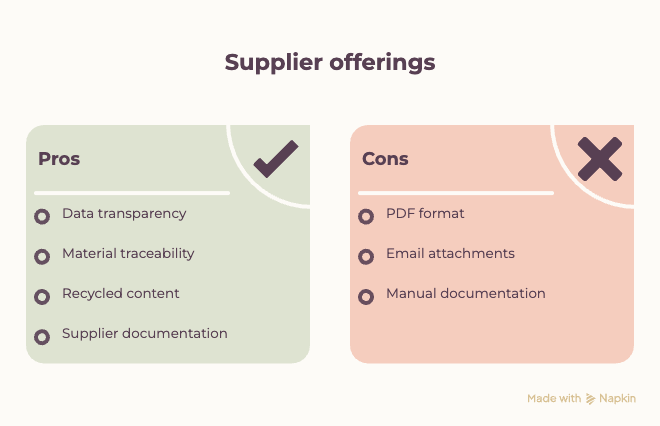
Imagine two suppliers offering similar products. Supplier A provides: Product carbon data, Material traceability, Recycled content verification, Supplier documentation.
While Supplier B provides messy PDFs, long email attachments and scattered manual documentation.
So what do you think:
Which supplier becomes easier to trust?
Which supplier becomes easier to onboard?
Which supplier receives fewer compliance-related questions?
The competitive advantage becomes obvious. DPP is not just compliance infrastructure. It is trust infrastructure.
Industries Most Impacted by Digital Product Passports
Batteries
One of the first sectors where DPP becomes mandatory. Key requirements include:
- Carbon footprint information
- Material composition
- Battery lifecycle data
- Performance information
- Recycling and recovery data
Impact on Indian Companies
Battery manufacturers supplying EV, industrial, and energy storage markets will need significantly higher levels of product traceability.
Textiles and Apparel
Textiles are expected to become one of the largest DPP use cases. Key requirements include:
- Fiber composition
- Material origin
- Recycled content
- Chemicals information
- Durability data
Impact on Indian Companies
India’s textile industry relies on complex, multi-tier supply chains. DPP will require visibility far beyond Tier 1 suppliers.
Plastics and Packaging
The plastics industry faces pressure from multiple directions:
- Plastic taxes
- Extended Producer Responsibility (EPR)
- Recycled content mandates
- Digital Product Passports
Impact on Indian Companies
Packaging suppliers will increasingly need to demonstrate material origin and recycled content through structured, verifiable data.
Steel and Aluminium
These sectors are becoming increasingly exposed to:
- Carbon transparency requirements
- Circular economy regulations
- Supply chain reporting obligations
Impact on Indian Companies
Carbon footprint data will become an important commercial differentiator.
Electronics
Electronics regulations increasingly focus on:
- Repairability
- Product longevity
- Spare parts access
- Lifecycle information
Impact on Indian Companies
Manufacturers must prepare for a future where product information extends beyond production and into the usage phase.
What Data Is Required for a Digital Product Passport?
While requirements vary by sector, common DPP data categories include:
| Data Category | Examples |
| Product Identity | SKU, serial number, product model |
| Material Information | Composition, origin, recycled content |
| Environmental Data | Carbon footprint, environmental impact |
| Compliance Data | Certifications, declarations |
| Circularity Data | Repairability, recyclability, durability |
| Supply Chain Data | Supplier and sourcing information |
| End-of-Life Data | Recovery and recycling guidance |
Common Challenges Companies Face with DPP Compliance
Most businesses already possess some of the required information. The challenge is that the data is fragmented.
Common issues include:
Lack of Supplier Visibility
Many companies only have visibility into Tier 1 suppliers.
Unstructured Data
Information is scattered across spreadsheets, emails, and PDFs.
No Product-Level Environmental Data
Most sustainability efforts remain company-level rather than product-level.
Siloed Teams
Procurement, ESG, operations, and sales often work with disconnected datasets.
How Indian Manufacturers Can Prepare for DPP
Step 1: Map Existing Product Data
Understand:
- What data exists
- Where it exists
- Who owns it
Step 2: Improve Supply Chain Traceability
Go beyond direct suppliers. Map critical upstream suppliers where possible.
Step 3: Measure Product-Level Environmental Impact
Build visibility into:
- Carbon footprint
- Material usage
- Resource consumption
- Material Sourcing
- Processes
Step 4: Structure Sustainability Data
Move from static documents to structured digital formats.
Step 5: Build Cross-Functional Ownership
DPP readiness involves:
- Procurement
- Operations
- Sustainability
- Compliance
- Product teams
- Sales
Why Waiting Could Be Expensive
Many organizations plan to start when regulations become mandatory. That approach creates risk. The challenge is not generating a passport. The challenge is building the underlying data infrastructure.
Companies that begin preparing today can:
- Spread implementation costs
- Improve supplier engagement
- Build internal capabilities gradually
Companies that delay may face:
- Higher compliance costs
- Buyer pressure
- Delayed onboarding
- Reduced competitiveness
The Bigger Opportunity Behind DPP
Every major regulatory shift creates winners. Not because those companies understand regulation better. Because they understand market shifts earlier.
Digital Product Passports create an opportunity to become easier to trust, audit, onboard and scale.
The companies that succeed won’t simply comply with DPP. They will use DPP to strengthen their position within global supply chains.
How Untrash Helps Companies Become DPP Ready
Untrash helps manufacturers and brands transform fragmented sustainability and supply chain information into structured, DPP-ready product intelligence.
Capabilities include:
- Lifecycle Assessment (LCA)
- Product carbon footprint measurement
- Supplier data collection
- Traceability workflows
- Compliance-ready reporting
- Sustainability intelligence across procurement, R&D, ESG, marketing, and compliance teams
Because the future exporter won’t just ship products. They’ll ship products with proof.
Frequently Asked Questions (FAQs)
What is a Digital Product Passport (DPP)?
A Digital Product Passport is a digital record that contains information about a product’s materials, environmental impact, origin, repairability, recyclability, and compliance status throughout its lifecycle.
Is DPP mandatory for Indian manufacturers?
DPP regulations are being introduced by the European Union. While the regulation directly applies to products sold in Europe, Indian manufacturers exporting to the EU will increasingly need to provide DPP-related information to customers and importers.
Which industries will require Digital Product Passports?
The first industries expected to be impacted include batteries, textiles, electronics, construction products, plastics, packaging, steel, aluminium, furniture, and other sectors covered under the Ecodesign for Sustainable Products Regulation (ESPR).
What is the relationship between DPP and ESPR?
The Ecodesign for Sustainable Products Regulation (ESPR) provides the legislative framework under which Digital Product Passports will be introduced across various product categories in the European Union.
When will Digital Product Passports become mandatory?
Implementation timelines vary by sector. Battery passports are among the earliest mandatory requirements, with other industries being phased in through delegated acts under ESPR over the coming years.
What information is included in a Digital Product Passport?
Typical information includes product identity, material composition, recycled content, carbon footprint, supplier information, compliance documentation, repairability data, and recycling instructions.
How does DPP affect Indian exporters?
Indian exporters will need to provide more detailed and verifiable product information to European customers, making traceability and sustainability data increasingly important for market access.
How can manufacturers prepare for DPP compliance?
Manufacturers should begin by improving data collection, mapping supply chains, measuring product-level environmental impact, structuring sustainability information, and building traceability systems.
Is DPP only about sustainability compliance?
No. While DPP originates from sustainability regulations, it also impacts procurement, buyer trust, supplier onboarding, and export competitiveness.
What software is required for Digital Product Passports?
Companies typically require solutions that support traceability, lifecycle assessment (LCA), supplier engagement, product data management, environmental impact measurement, and DPP-ready reporting.